A New Series Begins

    The Drowned Atlas

    New journeys across the drowned world of Tides of Tomorrow.

    ✦ Start Here — Book One

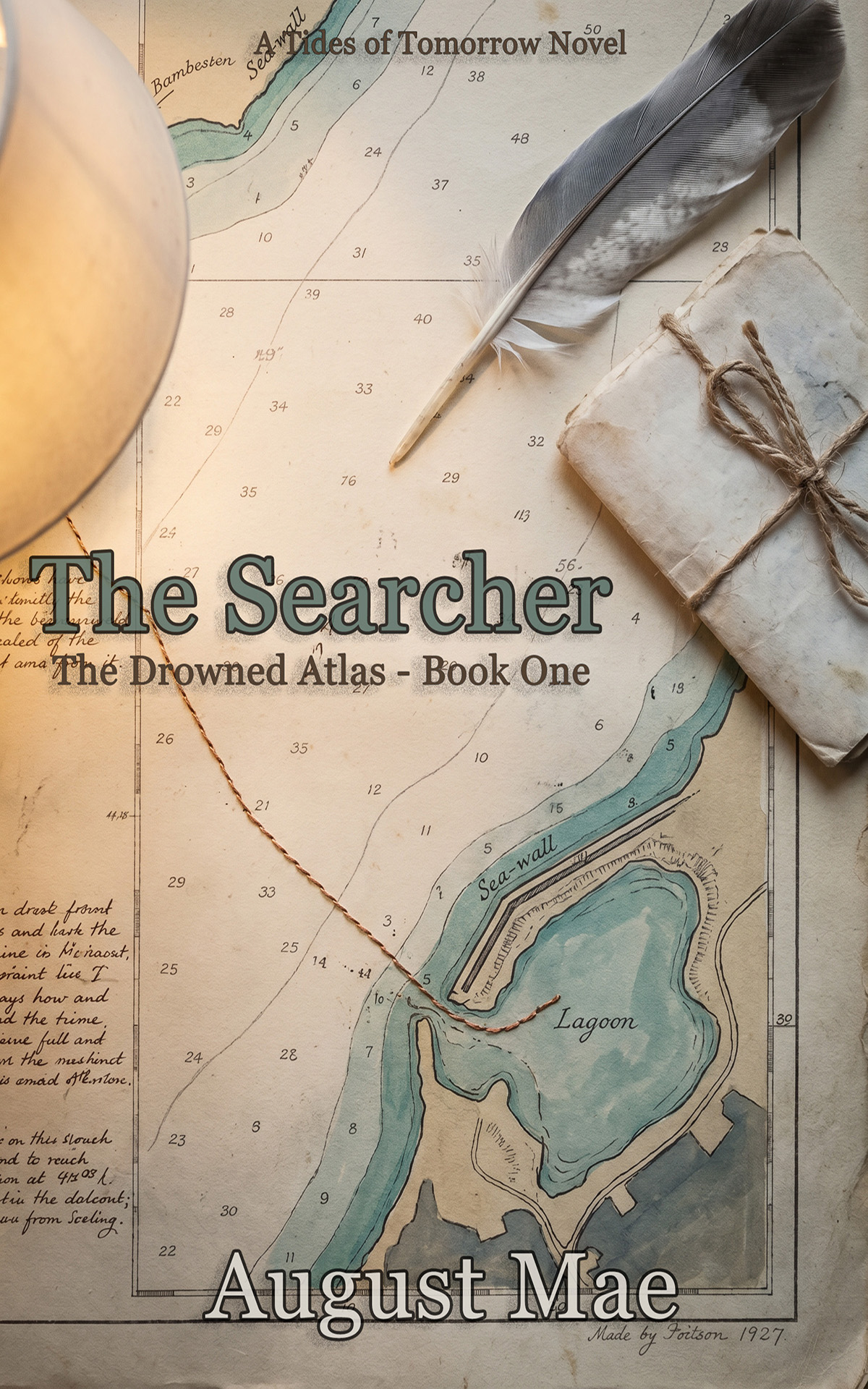
    Cover of The Searcher

    Book 1 — The Drowned Atlas

    The Searcher

    You cannot find one person in a drowned world. You can only connect the world until it hands them back.

    The sea rose. The world drowned. People adapted, and lost each other. Wren was one of the four who saved Havenswell: the scout who steered the medicine runners through the storm and came home a hero. But heroes carry private cargo. Hers is a letter, seven years old, folded soft as cloth, written to Rhea, the engineer who was traded to the drowned city's deep-dwellers, who asked Wren to descend with her, and whom Wren, who has never been able to stay anywhere, refused. Now Wren has learned the truth that broke her heart twice: Rhea surfaced years ago and went searching for her. Two women, circling each other across a drowned ocean. Ships passing. So Wren builds a boat for one purpose and sails into the unmapped margins of a flooded Britain, where stilt-hamlets dwindle on salt-meadows, traders sell hope shaped to your wanting, and no one trusts a lone sail. The search is failing, until a Bridge Folk captain offers a thread: an engineer woman crossed to the Welsh shore, to the lagoon people, and mended what could not be mended. Behind a fifty-year-old tidal wall, Wren finds the Lagan: a town living on held water and inherited courage, its sluice gate seized, its kelp harvest rotting, its keeper dead with his knowledge half-taught to a daughter who oils his tools and cannot use them. They flinch at Wren's question. They are packing to leave. And on a pump casing in their turbine hall, she finds a repair signed in the one way she would know anywhere: the mark of Rhea's hands. Then the trail goes suddenly warm, the autumn gales begin to close the one passage south, and Wren, who has spent her whole life running, faces the choice the drowned world has been steering her towards all along. The Searcher is the first novel of The Drowned Atlas, a new series set in the world of Tides of Tomorrow: a story of community, craft, and a love that refuses to stay lost, for readers of Becky Chambers, Station Eleven, and The Light Pirate. No villains. No despair. Hope, here, is a thing you build.
    HopepunkSearchingFound FamilyLGBTQ+
    Read more →
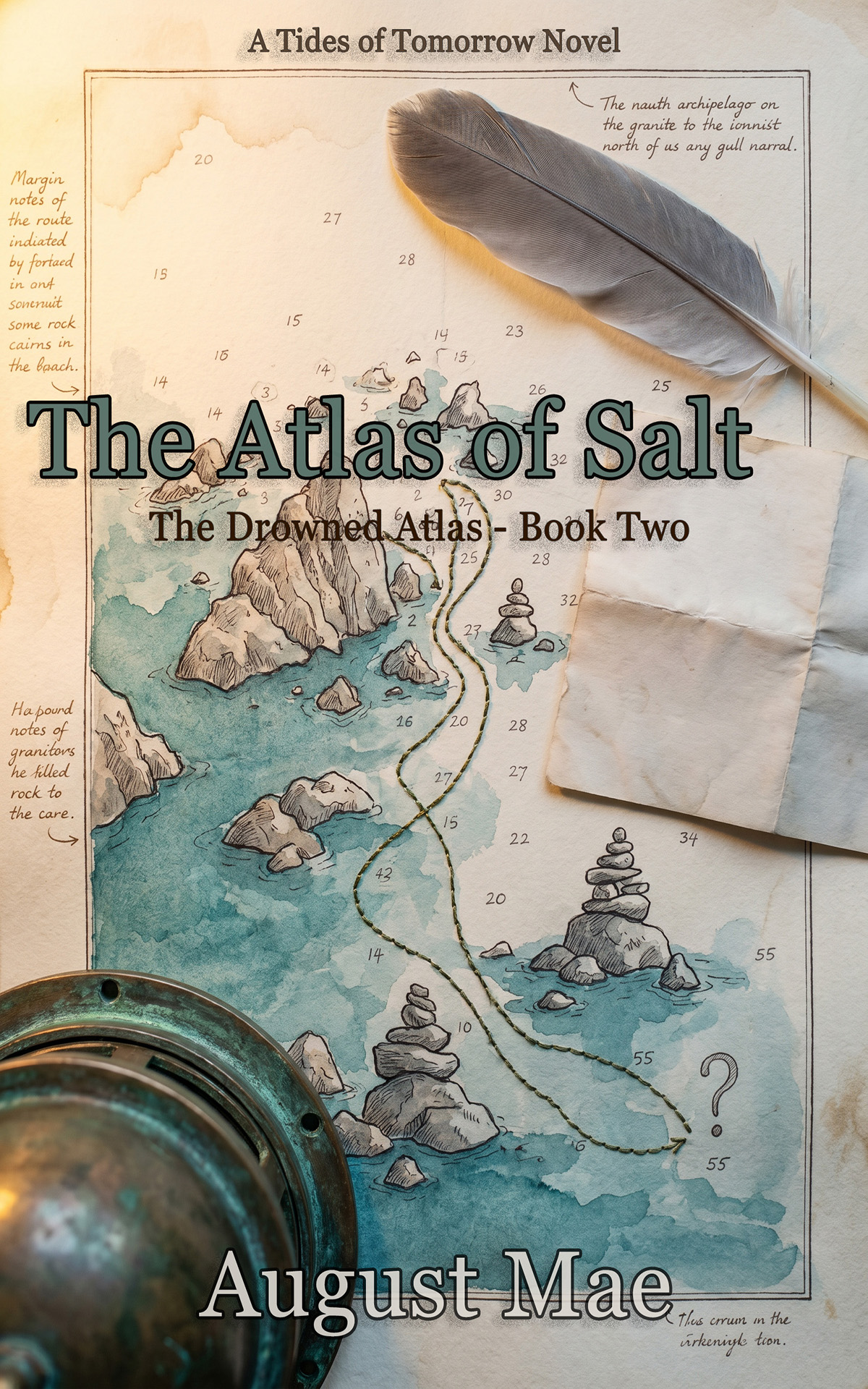
    Cover of The Atlas of Salt

    Book 2 — The Drowned Atlas

    The Atlas of Salt

    In the drowned world, nothing is lost that is kept.

    The sea took a country. The people came down to its high stone and went on living. A year after she mended a Welsh lagoon and earned her way into a closed community a tide's work at a time, Wren rounds the three southern headlands on the first fair weather of the year. In her sea-chest: the first fair copies of the Drowned Atlas, the hand-drawn charts that are stitching a sundered coast back together. Against her ribs, in oilskin worn soft as cloth: the letter she has carried seven years, and that, this winter, grew a page with a real address at last. Rhea. The trail has never been warmer. Rhea, the engineer Wren loved and lost, wintered on the tin coast a year ago and did the one thing she had never done in seven years of searching: she left her name behind, on purpose, with a harbour-keeper who has kept sixty years of what people trust the harbour to hold. A name left like a stone on a cairn, so the next walker knows the path holds. The Carns are a country of atolls: granite hilltops become islands above drowned valleys and sunken engine houses, where bell-divers and breath-divers bring up the tin and bronze that buy the winter's grain. The pilchard have gone north three summers running, so the tinners dive deeper, into the old workings their grandfathers let alone. And days after Wren's landfall, the sea collects the debt: a fall of ground in Wheal Patience kills one diver and seals three more alive in a high gallery that still holds air, with the spring tides flooding it by inches and roughly five weeks of breath between them and the dark. The direct shaft is choked. The only other way in is the long way, through the flooded levels under the seabed, a route no living diver has swum. But one diver surveyed those levels a winter past, in a hand Wren has learned to read the way other people read weather: culvert-true, question-marked, wire-signed. The rescue will need Gull's charts, a scout's tide-craft, and the patience of the slack. It will need exactly what Wren carries. And every day that buys the trapped men air carries Rhea another sea-mile north into the spreading world. Wren does not wrestle the choice for a season this time. She strikes her sails in a heartbeat, and feels every day of the cost. Because in a low room over the quay, a harbour-keeper is weighing a cause; and in a drawer no different from a hundred others waits a letter kept a year, addressed to no one at all. The Atlas of Salt is the second novel of The Drowned Atlas, a series set in the world of Tides of Tomorrow: a story of community, craft, courage in cold water, and a love crossing a drowned ocean by the only message that survives distance, the wake we leave in other people. For readers of Becky Chambers, Station Eleven, and The Light Pirate. No villains. No despair. Hope, here, is a mended pump, a drawn chart, a name kept against the day someone comes asking.

    HopepunkRomanceFound FamilyRescue
    Read more →
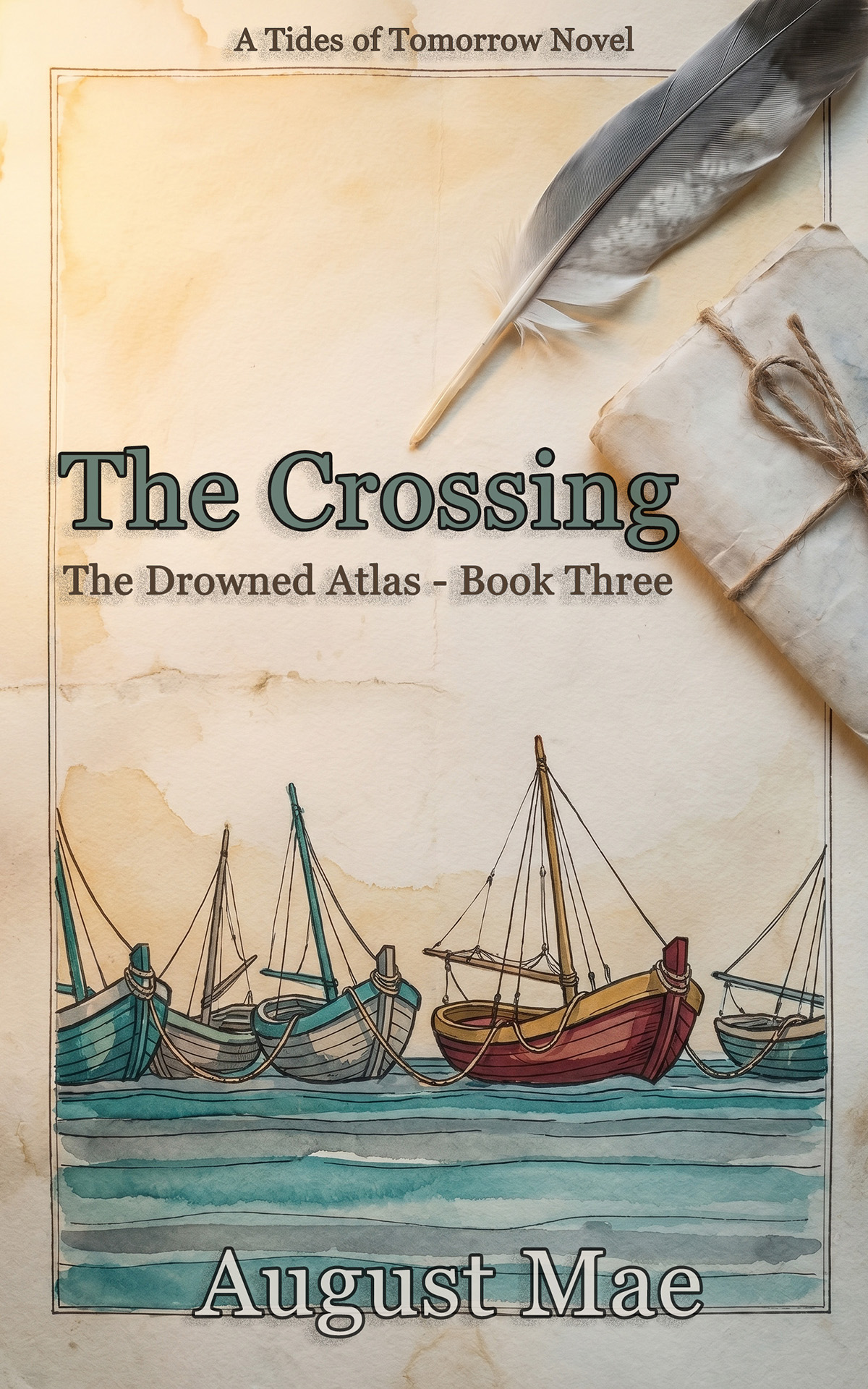
    Cover of The Crossing

    Book 3 — The Drowned Atlas

    The Crossing

    You cannot keep a fixed point in a living sea.

    Wren has spent her life learning to read water, and she has never needed the skill more than now. She crossed an ocean to keep an appointment. After years of circling the drowned coasts of Britain, she and Rhea, the engineer she loved and lost to the deep, finally did the one thing two people in motion can do: they named a fixed point. The Irish Sea crossings, at summer's end, where the great flotilla gathers. Wren consigned the promise north along the relay, made herself findable, and sailed to be there. She finds the meeting place cut loose and gone. The Knot is a nation that has never owned a harbour. Its people, the Bound, lash their boats into one floating town and unbind to fish, following the shoals down a lifetime of seasons. But the shoals have gone north and not come back, three summers running, and now the Knot must do the hardest thing it knows: hold together and cross the deep to grounds beyond the edge of the old charts, or cut the lashings and scatter to the land for good. Into that foundering nation, days before Wren, came Rhea, who reads a community by what is broken in it. She mended what she could, and she did not wait. She threw her keel in with a fleeing people and sailed on with them. So Wren has a choice, and it is the cruellest one the search has handed her yet. She can crowd on sail and run a warm trail down alone, the way she always has. Or she can give her craft to the Knot, pilot a whole moving town across a sea that has stopped feeding it, and follow the only people who hold the thread of where Rhea has gone. The trail is the warmest it has been in years. The season is closing. And the sea, which keeps every appointment it makes, is making one now that no one aboard is ready for. The third novel of The Drowned Atlas, The Crossing is hopepunk for readers of Becky Chambers, Emily St. John Mandel, and Lily Brooks-Dalton: warm, sea-deep, and built on the conviction that the way to find one person in a broken world is to help mend the whole of it, one community at a time.

    HopepunkRomanceFound FamilyCommunity
    Read more →
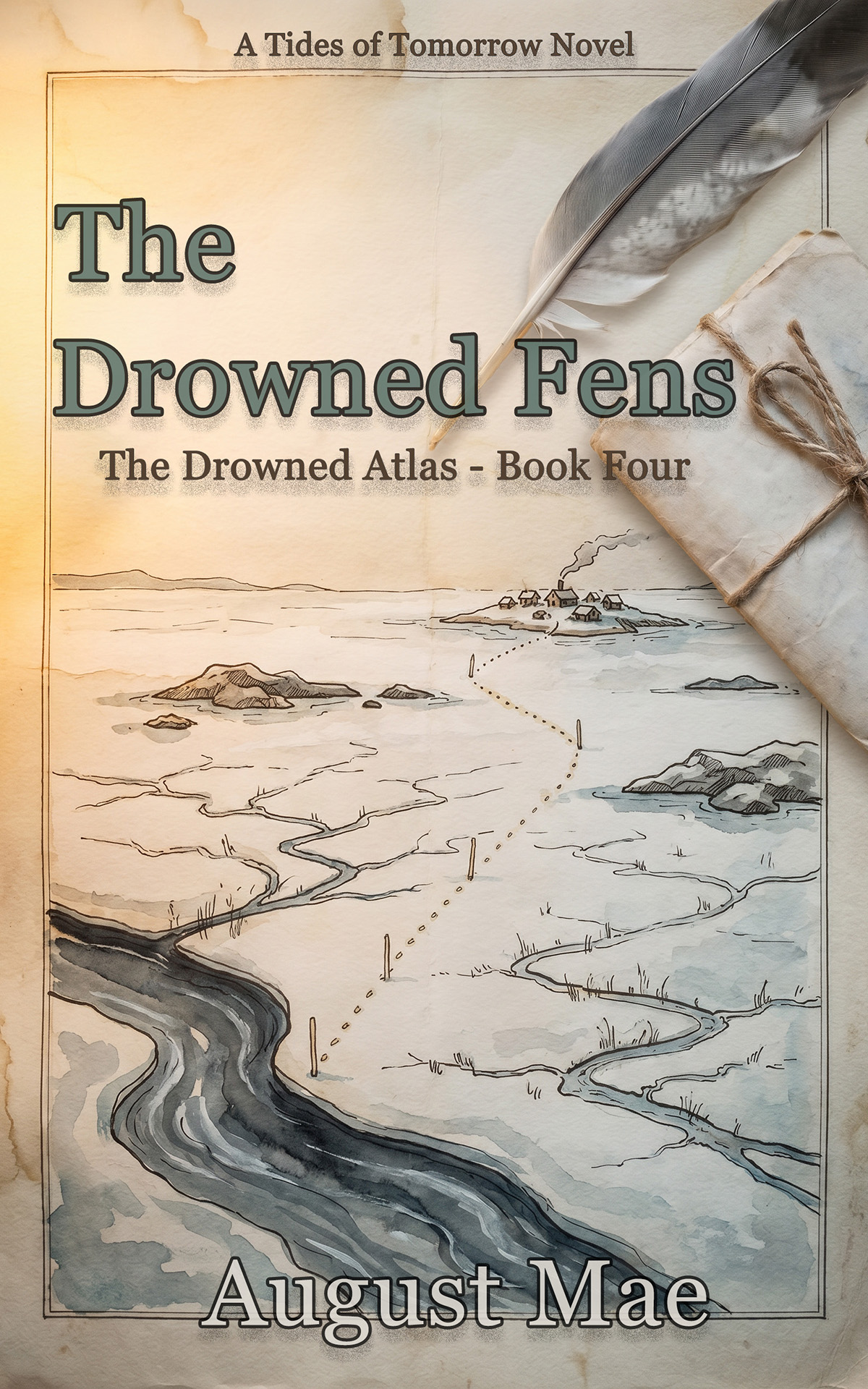
    Cover of The Drowned Fens

    Book 4 — The Drowned Atlas

    The Drowned Fens

    She found her at last. Then the whole world froze solid.

    Wren has spent her life learning to read water. Nothing in it has taught her how to read a sea that has stopped moving. After years of circling the flooded coasts of Britain for Rhea, the engineer she loved and lost to the deep, Wren follows a letter east: the first Rhea ever sent in her name, telling her to winter in the drowned Fens and be findable when the ice comes. Wren has chased a warm wake across half an ocean. Now, for the first time, the trail ends not in a rumour or a days-old repair but in a place that truly holds her. Rhea is here. Not a season ahead. Here. Then the cold comes down, the hardest in fifty years, harder than any since the waters first rose. The Fens are a wide shallow country of reed and brown water, where the Mere-folk live on scattered island eys and thread the lodes between them by punt and pole. When the great freeze sets the meres to iron overnight, every ey is cut off from every other, the stores half laid, the sick and the old stranded where they stand, and the people fall back on the oldest law their winters have taught them: each ey keeps its own, and waits the thaw, because the ice kills the impatient first. And Rhea is on the wrong side of it, sealed on the farthest ey of all, beyond a black river-course that the deep current keeps from ever freezing hard. For the first time in the long search, the thing between Wren and Rhea is not distance. It is stillness. Her whole craft is motion, and the water will not move. To reach the woman a few miles off, she will have to give up the chase she has run her whole life, learn an ice that does not bargain, and do the one thing that has always cost her the most: stay, and bind a frozen country together, one tested mark at a time, when every instinct screams at her to run across the killing white and take what she came for. The fourth novel of The Drowned Atlas, The Drowned Fens is hopepunk for readers of Becky Chambers, Emily St. John Mandel, and Lily Brooks-Dalton: warm, cold-skied, and built on the conviction that the way to reach one person in a broken world is to mend the whole of it, one community at a time, and that some crossings are not seized but earned, like the thaw, when the water comes back.

    HopepunkRomanceFound Familyfrozen wilderness
    Read more →
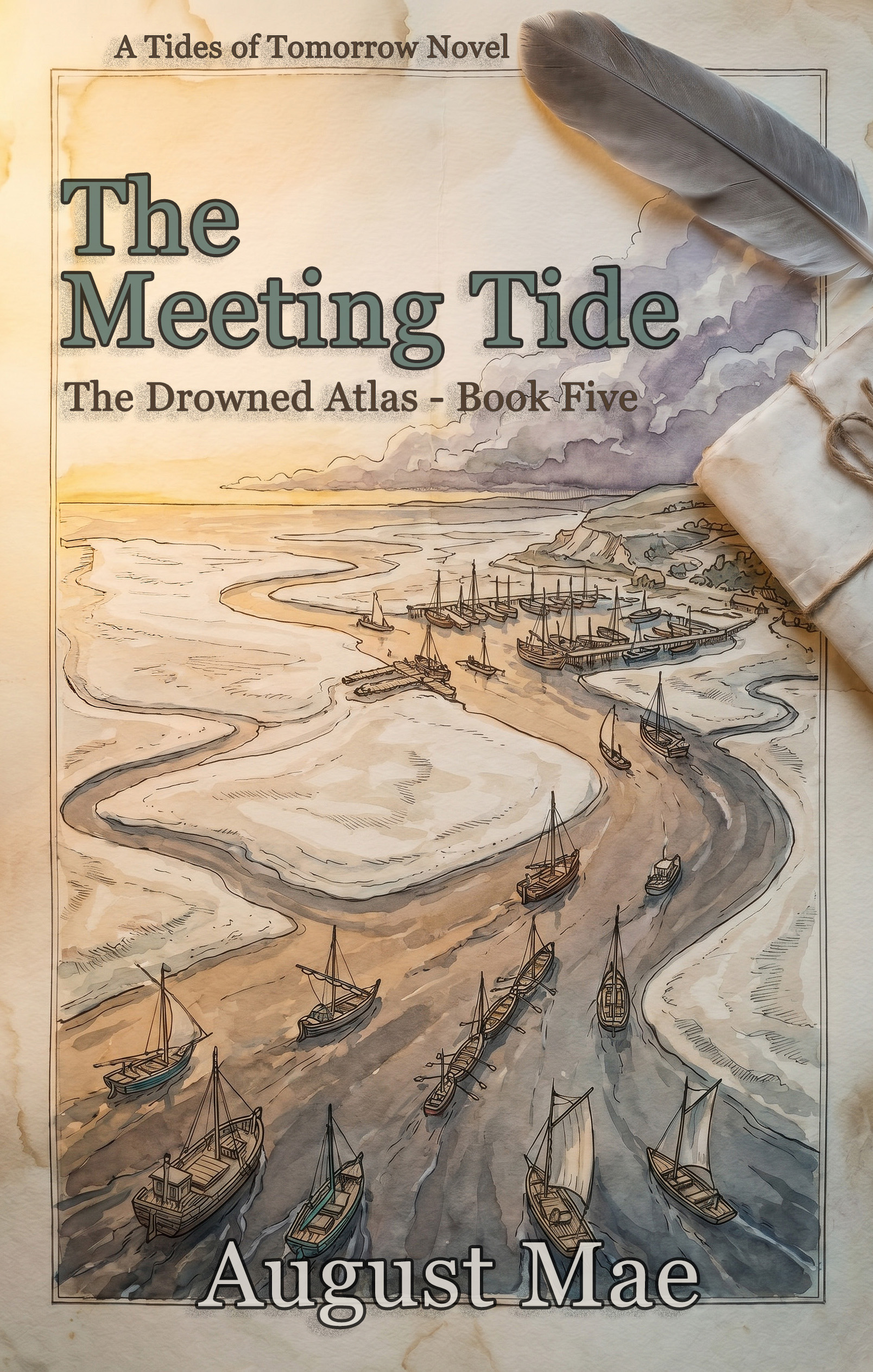
    Cover of The Meeting Tide

    Book 5 — The Drowned Atlas

    The Meeting Tide

    After seven years and five regions, the whole drowned world turns towards one tide. So do both of them.

    For seven years Wren has read Rhea the way she reads a wake: a passage already going away, the water still troubled by a woman she has missed by a tide, a season, a sheet of killing ice. She has searched five regions and learned the hardest lesson the drowned world has to teach: two people made of motion never meet. You cannot find one person in a severed world. You can only connect the world, community by community, until it hands them back. Then the spring thaw frees the water, and the Searcher lifts off the strand for the first time since the great freeze. Wren turns her bow not back east towards Wendsey, where Rhea wintered a few miles off, but west and south, because the carried word has named one place and one tide. Every community the Drowned Atlas has knit together is sending its boats to the Severn, to Havenswell, the floating harbour Wren first sailed from alone aboard a boat built for one purpose. It is to be the Meeting Tide: the first great gathering since the Unbinding severed the world fifty years ago. And Rhea has turned too. Not waiting to be crossed to. Closing the last of the seven years by water, mending pumps and dressing wire the length of the coast, both searchers bound for the same harbour at the same hour, neither chasing the other now. The whole connected world converges on the home water from every road Wren ever opened: the Lagan and their barrage-folk, the Carns up the salt roads, the Knot that is itself a road, the Mere-folk down from the frozen country by the routes the ice taught them to trust, and the Estuary Collective readying an anchorage that has never held more than its own. The gathering is warm and crowded and difficult, exactly as a true reunion of separated kin is difficult: doubled moorings, rationed water, a hundred honest disagreements between people who have never shared one tide. And in the press of arriving hulls, Wren and Rhea come into the same water at last, close enough to read, with one last small space still uncrossed. Then the sky turns. A spring storm begins to climb the funnel of the Severn, a deep low driving a surge against the very spring tide the gathering is named for, with more boats in one anchorage than any harbour was built to hold. The reunited world has gathered for the first time in fifty years, and the first thing it must learn is whether it can weather together what would scatter or drown any one of them alone. The fifth and final novel of The Drowned Atlas, The Meeting Tide is the convergence the whole series has built towards: hopepunk for readers of Becky Chambers, Emily St. John Mandel, and Lily Brooks-Dalton, warm and storm-skied and built on the conviction that the way to reach one person in a broken world is to mend the whole of it, one community at a time, and then to come to the place it has all agreed to gather, and stay, and ask the question seven years have earned: will the connected world finally hand her back?

    HopepunkRomanceFound FamilyRescue
    Read more →

    Set in the same world

    Tides of Tomorrow

    The five-novella story of Havenswell and the voyage that saved it.

    Explore Tides of Tomorrow →

    The Future Letter

    Letters from hopeful futures. Stories, worldbuilding, and early chapters delivered to your inbox.

    Stay curious. The future is still unfolding.